Do You Need Blackout, or Will Room Darkening Get the Job Done
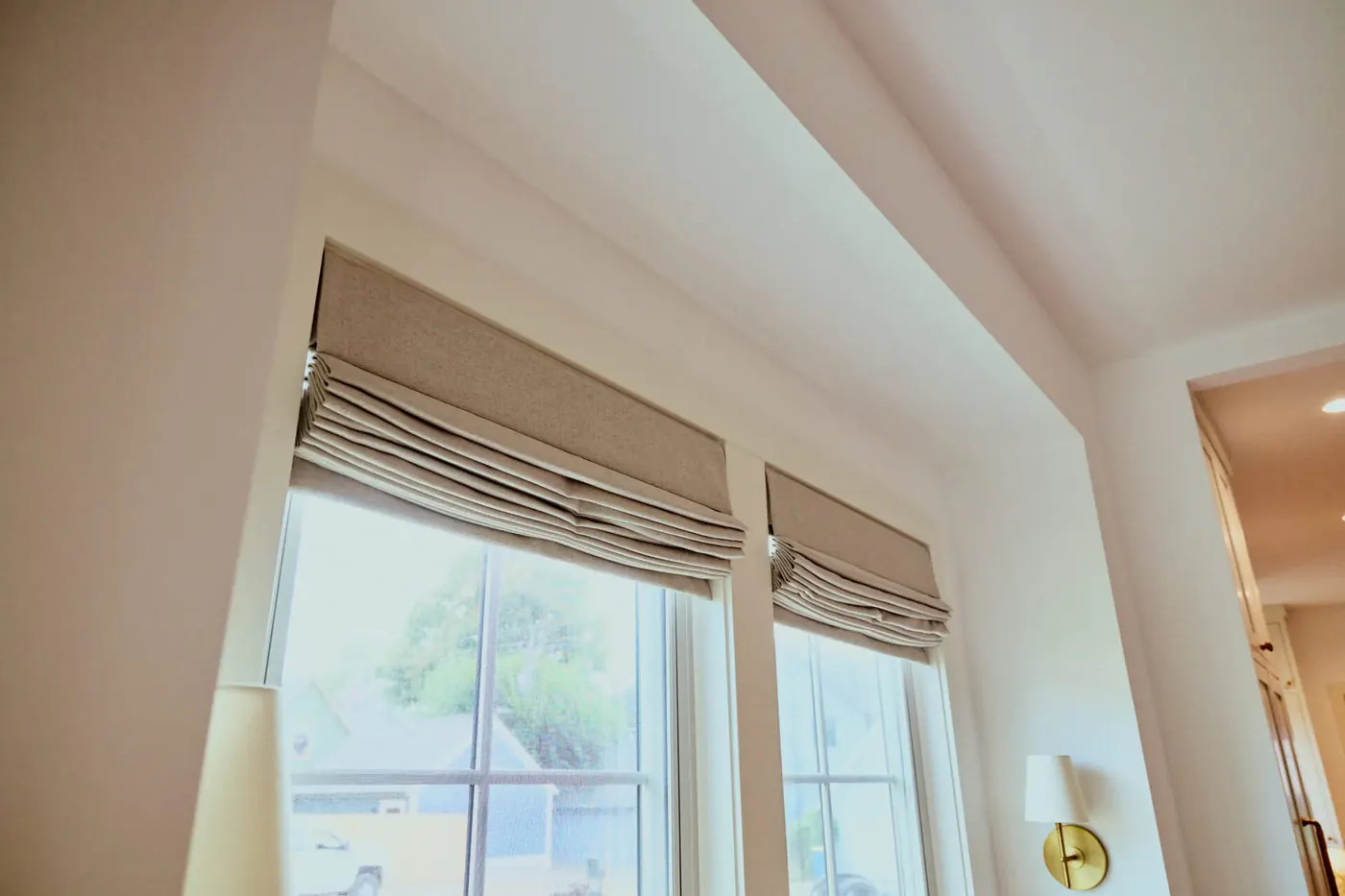
Blackout and room darkening get used like they mean the same thing, right up until someone installs a room darkening shade expecting full blackout results and wonders why the room still isn't dark.
What Blackout and Room Darkening Actually Mean
From a construction standpoint, blackout and room darkening aren't two ends of the same fabric, they're built differently from the start. Blackout fabric is engineered specifically to stop light from passing through the material, full stop. Room darkening fabric is built to reduce light substantially, usually blocking somewhere in the 95 to 99 percent range, without going all the way to fully opaque.
That's a manufacturing decision made before the fabric ever reaches a workroom, not something that varies much by brand. Once you know which spec you're buying, you know roughly what to expect from the material itself.
What you don't automatically know is how dark your specific room in Carmel will actually get, since the mount and the window itself play just as big a role as the fabric does.
How Much Light Gets Through, Realistically
Here's a detail that affects value as much as it affects light control in a Carmel home: even blackout fabric, mounted inside a window frame, leaves a small gap along the edges so the shade can operate without rubbing the frame. That gap is usually a quarter inch to half inch per side, and it lets some light through regardless of the fabric spec you paid for.
If total darkness is the actual goal, spending extra on blackout fabric while mounting inside the frame only gets you partway there. Outside mount, or a mount with side channels that block the edge gap, closes that light path more completely, and it's worth budgeting for that upgrade together with the fabric rather than fabric alone.
For a room where you just want things noticeably dimmer rather than fully dark, room darkening on a standard inside mount is often good enough, and it's the more budget-friendly choice for exactly that reason.
How the Fabric and Construction Differ
The construction difference is where the price and the performance both come from. Blackout fabric typically has three layers laminated together: the face fabric, a foam or acrylic middle layer, and a backing, sometimes with a fourth layer added for extra opacity. That lamination is what makes the material fully opaque even held up against a bright light.
Room darkening fabric usually skips one of those layers, often relying on a napped or foam-backed liner rather than full lamination. It's lighter and folds more compactly than blackout fabric, and that lighter build costs less to produce, which shows up directly in the price.
The heavier construction of blackout fabric has a side effect worth knowing about: it also blocks more outside noise and holds more heat than a lighter room darkening fabric would, for better or worse depending on the season and the room. It's a reasonable bonus in a bedroom and less of one in a sunroom you want warmed by the winter sun.
Which Rooms Call for Which Option
Primary bedrooms in Carmel are where blackout earns its price difference most clearly, especially for shift workers sleeping during the day or anyone in a west-facing room dealing with harsh evening sun. A room darkening shade helps in that situation, but it won't fully solve the problem the way blackout will.
Kids' rooms and nurseries are more of a judgment call than people expect going in. Full blackout helps with nap time and early bedtime, especially during long summer evenings, but some parents deliberately choose room darkening instead, so there's enough glow left to navigate the room at night without turning on a hallway light.
A guest room is a reasonable place to save some money with room darkening rather than blackout, since it gets far less use than a primary bedroom. A media room or home theater is the other space, alongside bedrooms, where full blackout usually earns its keep.
Price Difference Between Blackout and Room Darkening
Assuming blackout costs only marginally more is another mistake worth correcting before budgeting a project. As a general national range, room darkening shades run $100 to $300 per window, while blackout versions of the same style typically run $130 to $380, about 15 to 25 percent higher because of the added lamination.
Across a whole house, that difference adds up fast if blackout gets chosen by default rather than room by room. Reserving blackout for the rooms that actually need it, bedrooms and media spaces mainly, and using room darkening everywhere else keeps the total project cost more reasonable.
A free in-home measure is the easiest way to see both options priced out for your actual windows in Carmel, rather than guessing at percentages from a general range.
Getting a firsthand look at fabric samples side by side tends to make this decision a lot easier than picturing it from a description. A free in-home measure includes exactly that.
Frequently Asked Questions
Why is there still light around the edges of my blackout shade?
That's normal for an inside-mounted shade. The fabric blocks light passing directly through it, but the shade still needs clearance along the sides to raise and lower without rubbing the frame, and light gets in through that gap regardless of the fabric grade.
Is room darkening good enough for a nursery?
Plenty of parents choose it on purpose, since it leaves enough ambient glow to check on a sleeping baby without turning on a light. Others prefer full blackout for nap time. It really comes down to what works for your household.
Does blackout fabric block heat and noise too?
It blocks a bit more of both than room darkening does, as a side effect of the heavier, multi-layer construction, though that isn't the main reason most people choose it.
 What Actually Goes Wrong With Motorized Shades in Carmel
 Repair or Replace Your Carmel Blinds: How to Decide
 Do Your Carmel Windows Need Inside Mount or Outside Mount Blinds?