Woven Wood Shades

Woven Wood Shades in and Around Carmel, IN

Natural texture for rooms that look into trees

Call (317) 863-9966Get Free Quote
Quick Answer

Answers to the common questions on this service, written the way we'd explain it at your window. If the terminology is unfamiliar, the questions below define it as they go.

  • Service: Woven Wood Shades for Carmel homeowners
  • Service area: Carmel, IN and surrounding areas
  • Nothing in window treatments needs a middle-of-the-night call-out. What matters is the fabrication window, typically two to five weeks. Service and repair work sits outside that and gets handled on a much shorter timeline.
  • Insured and bonded
  • Serving Carmel, IN since 2008
Woven Wood Shades Services

Expert Woven Wood Shades for Carmel Homes

Woven wood shades are bamboo, reed, jute and grasses woven into a shade that filters light rather than blocking it. The material has visible texture and irregularity, which is the point, and it gives a room something no manufactured fabric does. In Carmel the natural fit is a room looking into real trees: the ravine lots along Williams Creek where roughly 85 of Jackson's Grant's 300 acres were kept as woodland, and the fifty year old canopy over Brookshire and the Cool Creek plats.

How much light passes depends on the weave, and the range is wide. An open weave throws a pattern of light across the floor and gives very little privacy. A tight weave behaves closer to a solid shade. Because the material is natural, no two shades are truly identical and there is color variation within one shade, which most buyers want and a few do not. We show a full sample rather than a two inch chip, because a small piece does not tell you what a whole window will look like.

The liner conversation happens before the order, not after. Without a liner, a woven wood shade at night with lights on inside gives you almost no privacy, and it will not darken a bedroom at all. A privacy liner solves both at the cost of some of the texture from inside. The other honest point is dimensional: natural material responds to Carmel's four month muggy season, and a woven shade can relax slightly and change how tightly it rolls or stacks between July and January.

When to Call

Signs You Need Woven Wood Shades

If you notice any of these in your Carmel home, it is worth booking a measure. None of it is urgent, and none of it fixes itself either.

The room looks into standing trees and needs a natural material

Painted blinds feel wrong against a wooded rear elevation

You want texture without hanging fabric drapery

An old woven shade has loosened and lost its shape

The room needs filtering rather than full light blocking

You want warmth in a room with a lot of hard surfaces

Existing shades give no privacy after the lights come on

A sunroom needs something softer than a roller

Our Process

How Carmel Window Treatments Handles Woven Wood Shades

Every job follows the same six-step process. Transparent, thorough, and done right the first time.

1

Look at what is outside

The view drives this product more than the room does. A shade looking into mature timber on a ravine lot wants a different weave from one looking at a neighbor's wall. We stand at the window and decide how much of that view the weave should keep, then choose the density from there rather than from a photograph in a book.

2

See a full size sample

Natural materials vary within a single shade, so a small chip is misleading. We bring a large sample, hold it against the opening with daylight behind it, and let you see the actual light pattern it throws into the room. That is also when we discuss whether the variation in the material reads as character to you or as inconsistency.

3

Decide on a liner

No liner keeps the texture and gives you filtering only, with essentially no privacy after dark and no room darkening. A privacy liner adds both and mutes the texture from inside. A blackout liner darkens more and adds weight. On a bedroom or a street facing room we settle this before pricing, because the liner changes the stack, the weight and the operating system.

4

Measure with edge gaps in mind

A woven shade will not fit an opening perfectly tight, so on an inside mount the gap at the edges is visible and light passes through it. Where a room needs coverage rather than decoration, we mount outside with real overlap. Three widths, three heights and a diagonal per opening as always, plus the mounting depth at the stop.

5

Choose stack and edge finish

Woven woods can roll or fold, and each stacks differently at the head. A bound edge in a coordinating fabric tidies the sides and can pull the shade toward a more formal room. On tall openings we check the stack depth against how much glass you are willing to lose, since a heavy natural material bundles deeper than a roller fabric does.

6

Install and let it settle

Brackets level, shade hung, full travel checked. Then we tell you plainly that a natural material takes a few weeks to settle into its hang, and that it will move slightly with the seasons in this climate. That is behavior rather than a defect, and knowing it in advance stops a normal seasonal change from feeling like a fault.

Real Project Photos

Woven Wood Shades in Carmel

Photographs from real woven wood shades jobs completed by our crew in Carmel and surrounding areas.
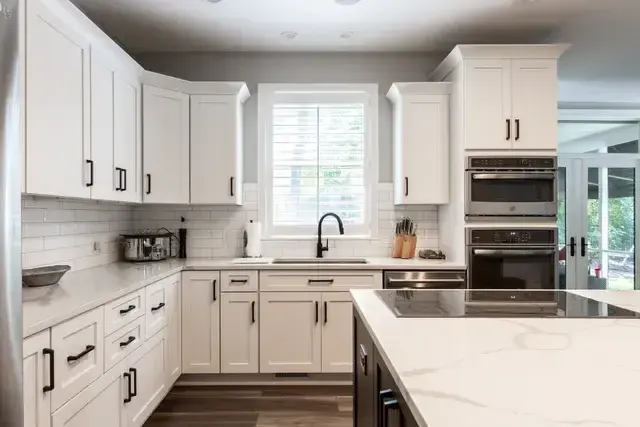
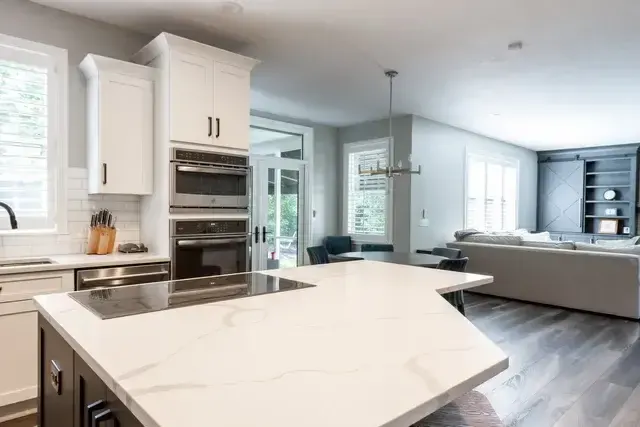
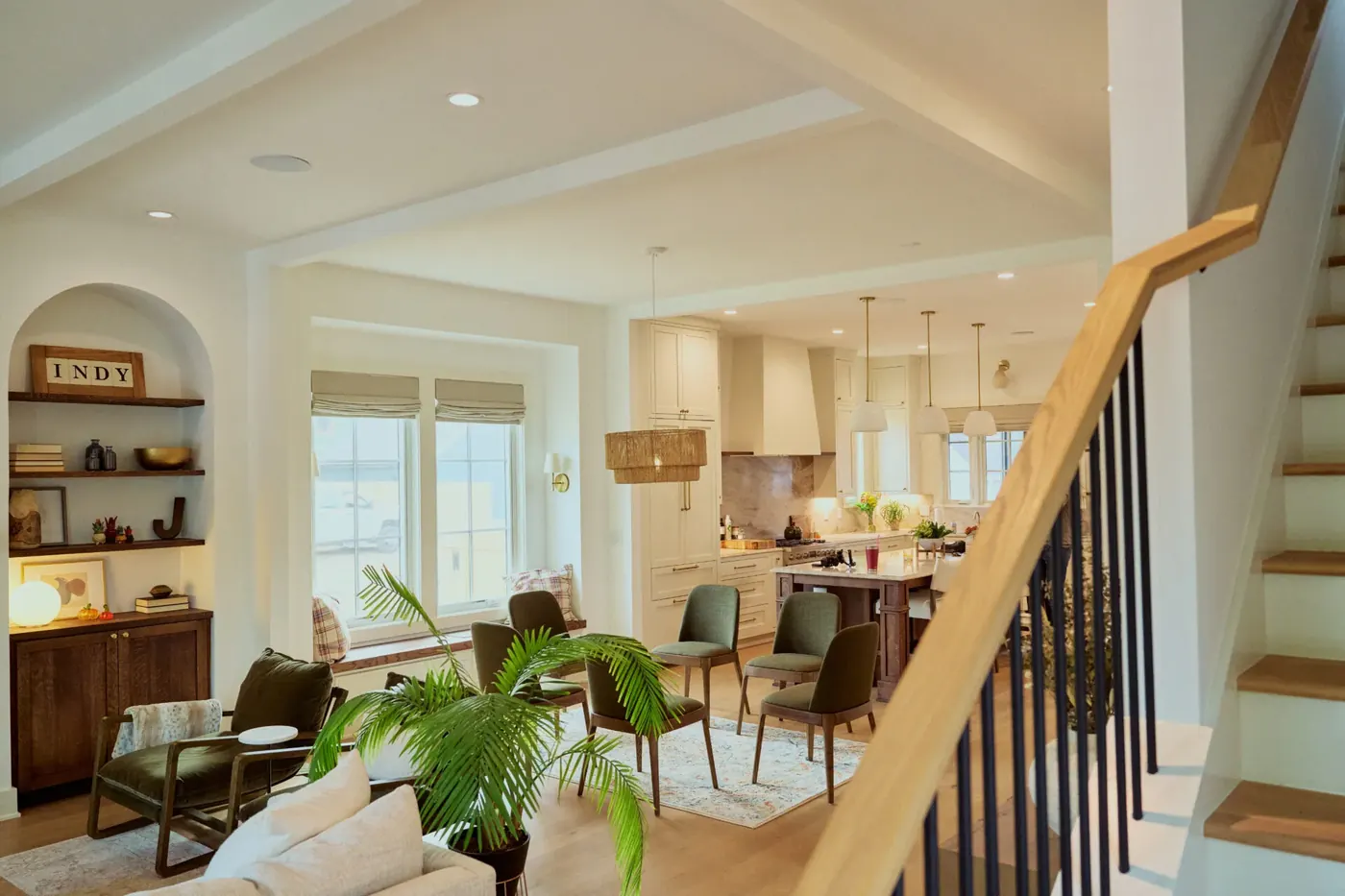
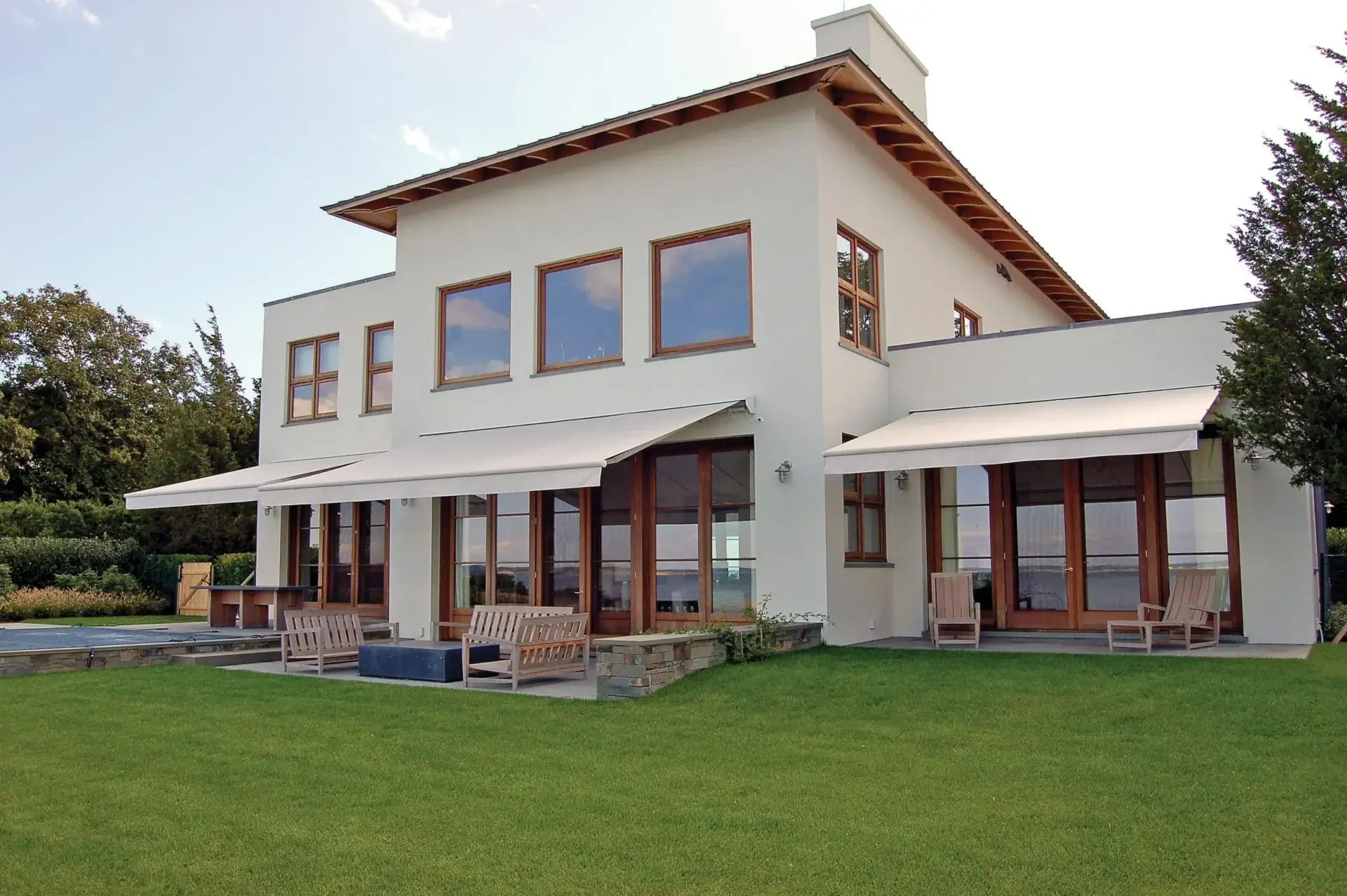
Custom shades measured and installed in CarmelPlantation shutters fitted to a Carmel windowCellular shades in a Carmel living room
Scope of Work

What Woven Wood Shades Includes

Every Carmel job is documented item by item. Here is what the crew covers.

Three widths and three heights at every opening plus a diagonal check, because a natural weave shows an out-of-level hem plainly

Inside-mount depth checked against the bundled material, which needs more room than a rolled fabric does

Stack height figured against the actual weave, since a natural material bundles much deeper than a roller of the same size

Material chosen by weave and fiber: split bamboo, flat reed, jute, grasses or a mixed weave with wood

Samples left in your own daylight for a day, because these read nothing like they do under a showroom bulb

Privacy liner decided window by window, light filtering or room darkening or none, and written on the order

The liner's effect on the look shown with a sample held behind the weave before you commit to it

Edge banding specified anywhere a cut edge would ravel or read unfinished against painted trim

Valance style and depth chosen so the headrail is actually covered rather than half hidden

Top-down bottom-up specified where a room wants daylight up high and cover down low

Lift specified as cordless, a cord loop with a tensioner, or a motor sized to a heavy lined natural

ANSI/WCMA A100.1-2022 cord safety applied per opening, and cordless specified in any room a child uses

Natural variation between the hand sample and the production run explained before the order goes in, not after it arrives

Every shade for one room ordered on the same purchase so the material comes off the same run

Openings over a cooktop or inside the spray of a shower identified and moved to a different product

Extension brackets specified where a shallow opening won't take an inside mount cleanly

Headrail brackets landed in framing, since a wide natural with a liner is heavier than it looks

Folds dressed and the shade cycled on install day so the material learns to stack evenly

Pricing

What Woven Wood Shades Cost in Carmel

National category figures run about $60 to $600 per window for stock shades and about $250 to $2,600 per window for custom-fabricated ones. Read those as national ranges for a category rather than a price for a house in Carmel. Naturals sit across a surprisingly wide part of that band. A basic split bamboo on a small opening is near the bottom. A hand-woven grass with a room darkening liner, edge banding and a waterfall valance on a tall window is a different animal. The liner is the single biggest add most people don't budget for, and it roughly changes what you're buying. Carmel Window Treatments prices from measured openings in Hamilton County, with the liner decision made before the number is written, not bolted on afterward.

By Product

How Woven Wood Shades Differ by Product

Every product in this trade behaves differently in a room. Here is what that means for this work.

Split bamboo: Round or halved bamboo canes woven with cotton or jute string. It's the most familiar natural look, it hangs with a strong horizontal line, and the gaps between canes are exactly where light and sightlines get through at night.

Flat reed: Flattened reed woven tight, giving a smoother face and a finer scale than round bamboo. It reads more refined in a formal room, and because the weave packs closer it holds back a little more daylight on its own.

Jute and grass weaves: Softer fibers with visible slubs and color shifts running through the material. This is where the texture argument gets won, and it's also where variation between one shade and the next is most obvious. That variation is the material, not a fault.

Mixed weave with wood: Thin wood slats woven in among reed or grass, adding a stiffer horizontal element and usually a second color. It bridges the gap between a natural shade and a wood blind, and it stacks a bit tighter than an all-grass weave.

Light filtering privacy liner: A fabric backing sewn behind the weave that blocks sightlines while letting a soft glow through. It's what makes a natural shade usable in a bedroom, and it hides the weave from inside the room when the shade is down.

Room darkening liner: A denser backing for bedrooms that need real darkness through the material. It adds weight and stack depth, and it stops the woven texture reading from inside entirely, so you get the look from the street and a flat panel from the sofa.

Edge banding: A cloth or matching-material tape finishing the cut sides of the shade. It stops a raw woven edge from raveling, and on a shade sized down from stock width it's the difference between looking made and looking cut.

Waterfall valance: The material carries up and over the headrail in one continuous piece instead of a separate flat panel. It hides the hardware without introducing a second horizontal line, which matters on a shade whose whole appeal is texture.

Top-down bottom-up: Two lift systems on one shade let you drop the top for daylight or raise the bottom for cover. On a street-facing room it gives you light at the ceiling and privacy at eye level without choosing between them.

Cordless lift: You raise and lower the shade by the bottom rail with nothing hanging beside the window. On a heavy natural with a liner the mechanism has to be sized for the real weight, so we specify the liner before the lift, not afterward.

Light Control

See What Each Fabric Does To The Light

Pick a fabric below and the window updates. It's a drawing rather than a photograph, so read it as a rough guide to what each family does in a Carmel room, and to what it doesn't do.

Fabric type

Sheer, 10 percent openness

Ten percent of the weave is open, so you keep the view and most of the daylight. Glare drops a little. After dark, once your lamps are on, someone outside can read shapes through it, which is why this belongs on a view window rather than a bedroom.

Openness factor is printed on the fabric card, so you can compare one line against another before you order anything.

Keeps the viewNot private after dark

Solar, 5 percent openness

The usual pick for a west window or a covered porch. You can still read the yard through it, glare comes down noticeably, and the fabric intercepts a good share of the sun before it reaches you at four in the afternoon.

It also cuts the UV landing on floors and furniture. NFRC puts UV at roughly 40 to 60 percent of fading damage, so this slows fading rather than stopping it.

View and glare controlSlows fading

Solar, 3 percent openness

A tighter weave. The room goes dimmer and the view drops back to an outline. Choose it where the sun is the problem and the view is second, which around here usually means a west wall in July. That's a common call on this side of Indianapolis.

Openness affects how much you see out, not how private you are. A 3 percent fabric still shows silhouettes at night.

View becomes an outlineStrong glare control

Solar, 1 percent openness

Close to a solid fabric with a little view left in it. This is the strongest glare control in the solar family.

The trade is that it darkens the room on a gray January day too. Indianapolis averages a January high near 36F and the light is flat, so think about how the room reads in both seasons before you commit.

Darkest solar optionDim on gray days

Light filtering

No view through it. Daylight comes through the face diffused, so the room stays bright without a hot spot across the television or the kitchen island. This is the default for living spaces.

It isn't private in reverse at night. With the lamps on and the sun down, silhouettes still show.

No view through itBright without the glare

Room darkening

A denser fabric, usually with a liner behind it. Most of the light coming through the face is gone.

Light still arrives around the edges on an inside mount, so a room darkening shade gives you a dim room rather than a dark one. If someone in the house sleeps during the day, say so at the measure and we'll scope it differently.

Dim, not darkEdges stay bright

Blackout

The fabric itself passes essentially no light. What you'll still see is the perimeter. Lutron publishes an inside-mount light gap of about 3/4 inch per side on its Roller 20 and 64 shades, along with a standard factory deduction of 1/16 inch per side, and shades over 120 inches tall or past a 4:1 height-to-width ratio get larger gaps than that.

So if you need a genuinely dark bedroom, that gap has to be dealt with on purpose, either with side channels or by going outside mount. We tell you which one your opening can carry while we're still standing in the room.

Dark facePerimeter needs a plan

Openness factor is a measured fabric spec, so you can compare it line to line. The category names are not measured. One maker's room darkening can behave like another maker's light filtering, which is why the sample books come to the measure and get opened in the room they're going in, at the hour that room has the problem.

Common Questions

Woven Wood Shades FAQ

Questions we hear most often from Carmel homeowners considering woven wood shades.

During the day, a reasonable amount, because the brightness outside is higher than inside and the weave breaks up the view. After dark, with lamps on, very little, and an open weave gives almost none. If the room is street facing or looks onto a path people walk along, the shade needs a privacy liner, which is a decision that has to be made before fabrication. In Carmel we ask specifically about rear elevations facing a fairway or a greenway, since foot traffic behind the house changes the answer. Adding a liner also changes the light the shade throws, since the pattern of daylight through an open weave is one of the reasons people choose the product and a liner removes most of it.
Slightly, yes. Bamboo, reed and grasses are natural materials and they respond to a climate that runs about four muggy months from late May to late September followed by a dry heated winter. What you notice is a small change in how the shade hangs or how tightly it stacks between seasons, and occasionally a slight relaxation of the weave over years. It is not a defect and no manufacturer treats it as one. If you want a material that does not move at all, that points toward a synthetic roller instead. Storage matters as well: a woven shade rolled or stacked in an unheated space for months before installation will behave differently from one that has settled in the house.
Only with a blackout liner, and even then not completely on an inside mount. The liner stops light through the shade itself, but the shade still has to be narrower than the opening to operate, so light comes down each side, and a natural weave leaves slightly more edge gap than a fabric roller does. For a bedroom that has to be dark, the honest specification is an outside mount with generous coverage or a separate blackout treatment behind the woven shade, which also lets you keep the texture during the day. A separate blackout roller mounted behind the woven shade is often the cleanest answer, because it keeps the natural texture visible by day and does the actual light control by night.
In a bathroom with regular shower steam, no. Natural material holds moisture, and in a room that stays damp through Carmel's muggy season it can develop odor and staining. A kitchen window away from the cooking is usually fine, but a woven shade over a hob will pick up grease that cannot be wiped off the way a hard product can. Where you want the look through the whole house, we keep woven woods in the dry rooms and coordinate a composite or vinyl product in the wet ones. In a powder room without a shower a woven shade is usually fine, so this is about steam rather than about the presence of plumbing.
Because it is a natural material, and the reeds or grasses in a single shade were not identical to begin with. Manufacturers sort and blend, but they cannot eliminate variation, and most buyers choose this product precisely for that irregularity. Where it becomes a problem is matching across a room: two shades made months apart can differ noticeably. Ordering a room together helps, and we will show you a large enough sample that you can judge whether the variation reads as character to you before anything is made. Ordering a full room together also lets the workroom pull material from adjacent runs, which produces a closer match across the openings than ordering the same product twice a year apart.
Dry only. A vacuum with a brush attachment on a low setting, working along the weave, handles dust. Water and cleaning products will stain and can swell the material. If a shade in a busy room is going to need periodic wet cleaning, it is the wrong product for that room and a fabric roller or a hard product will serve you better. In a formal dining room or a bedroom, dry dusting a couple of times a year is realistically all a woven shade ever needs. If a shade does get marked, cutting the affected section out is not an option the way it is with fabric, so the practical repair on a natural material is usually replacement of the single shade.
Yes, and it is worth considering on anything above reach, which in Carmel often means the upper units of a two story great room wall. The consideration specific to this product is weight: a lined woven wood shade is heavier than an unlined fabric roller of the same size, and the motor and tube have to be specified for it. We also survey the radio path before quoting, because masonry and foil faced insulation drop shades off the network and a repeater belongs in the quote rather than in a callback. The other consideration on a tall opening is stack, since a woven material bundles deeper than a fabric roller and can cover noticeably more glass at the top when fully raised.
The material can look similar in a photograph and the difference shows up in fit and construction. A stock bamboo blind comes in fixed widths, so on an out of square opening in a settled Carmel house it either binds or shows a wedge of light, and its edges are cut rather than finished. Custom woven woods are made to your measured opening, can carry a bound edge, take a liner properly, and offer lift systems that a stock product does not. For a secondary room, the stock version is a defensible purchase and we will say so. The other difference is the liner, since a stock bamboo blind rarely offers one and the privacy question is exactly where most people end up disappointed with the cheaper version.
Unlined, no. This is the thing we say out loud before anyone orders. A woven natural is made of canes and fibers with gaps between them, and light passes both directions through those gaps. In daylight you can't see much from outside, so people assume they're covered. At night with the lamps on, the lighting flips and the room becomes visible in silhouette from the street. If a Carmel room needs privacy after dark, it needs a liner, and that decision belongs in the quote.
It changes it, and there's no way around that. From the street the shade still reads as woven texture, because the weave is what faces out. From inside the room you're looking at the liner, so the grain and the shadow play you fell in love with are mostly gone when the shade is down. Some people order the liner anyway and love it. Others move the natural to a window that doesn't need privacy. We hold a liner sample behind the weave at the measure so nobody finds out later.
Because they're grass and reed and bamboo, grown outdoors, and they vary by harvest and by run. Two shades from the same order can differ a shade in tone or slightly in weave density, and both are correct. This is the same material that people pay extra for precisely because it isn't uniform. What we do about it is order every shade for a room at once so they come off the same production run, and show you a real hand sample rather than a printed swatch.
Yes, gradually. Natural fiber lightens with UV exposure, and a west-facing window will move faster than a north one. A liner slows it by taking some of the exposure, and so does keeping the shade partly raised during the hardest hours. Nobody in this trade can prevent it, and NFRC puts UV at roughly 40 to 60 percent of what causes fading, so the honest word is slowed. Over years, most naturals mellow rather than blotch, which is part of why the material ages well.
A kitchen window over the sink is fine. A window right beside a cooktop is not, because natural fiber takes on grease and cooking odor and never really gives it back. In a bathroom it depends on the room: a powder room is no problem, and a full bath with a shower running twice a day puts moisture into the fiber. If a shade is going to sit in the spray line, we move that opening to a poly shutter or a moisture-tolerant shade and keep the natural elsewhere.
A meaningful amount, more than a roller and often more than a cellular. Bamboo and reed don't compress, so raising the shade bundles the material into a thick stack at the top, and adding a liner makes that stack deeper still. On a short window the stack can take a real bite out of the daylight. We calculate the number at the measure, and where the view matters we mount outside the opening so the stack sits above the glass instead of on it.
Some, and less than a cellular shade. An unlined natural is mostly texture and shade, cutting glare and softening direct sun without adding much of a barrier. Add a liner and you get a bit more, mainly by cutting air movement at the glass. The documented energy testing in this trade sits with cellular shades, where DOE and ORNL work showed savings of up to 20 percent on heating energy against a bare window, and quoting that on a bamboo shade would be borrowing somebody else's result.
Dust regularly with a vacuum brush attachment on low suction, running with the weave rather than against it. A dry microfiber cloth works for touch-ups. Keep water off the fiber, since soaking swells the material and can leave a mark that dries in permanently. For a heavier clean, a soft brush and patience beat any liquid. If a liner picks up a spot, blot it rather than rubbing, because rubbing pushes the mark into the backing.
Yes. Cordless lift is available on most natural shades and it's what we specify in any room a child uses. ANSI/WCMA A100.1-2022 is the product safety standard behind that, and non-compliant inner cords are a substantial product hazard under 16 CFR 1120.3. The one thing to know is weight: a wide natural with a room darkening liner is genuinely heavy, and the cordless mechanism has to be spec'd for that weight or the shade won't hold where you put it.
Banding is a tape of cloth or matching material finishing the two cut sides of the shade. Natural material is woven in wide goods and then cut to your width, which leaves an edge where the weave wants to unravel. Banding closes that edge. On a shade that ends up close to a stock width you may not need it. On a shade cut down a long way you do, and it also gives you a chance to pull a second color out of the room.
Yes, and it's one of the better uses for the feature. A street-facing front room gets daylight from the top of the window while the lower part stays covered, which is exactly the problem naturals otherwise struggle with. The trade-off is a second lift system, more hardware in the headrail, and a stack at both ends of the shade. It also costs more. On a bedroom where you mostly want the shade all the way down, it isn't worth it.
They solve different problems. A solar shade is an engineered mesh with a stated openness factor, so it cuts glare and heat by a known amount while keeping the view out. A natural is texture and warmth, and its light control is whatever the weave happens to do. On a west-facing wall of glass where afternoon glare is the complaint, solar wins. In a room that reads cold and needs something organic against a lot of hard surfaces, the natural is the answer. Layering both happens often.
Assume not, and be pleasantly surprised. Natural material runs in production lots the way fabric runs in dye lots, and a bamboo woven next season can sit noticeably off the one you have. Side by side on the same wall in daylight, that shows. If you know another window is coming, order it now and store it. We'll record the material name and the run on your file, which improves the odds on a reorder without guaranteeing anything.
Individual canes can split over many years, usually in a window that gets hard afternoon sun and in a house that runs very dry through a central Indiana winter. It's not common and it isn't sudden. Keeping the shade off a hot glass surface during peak sun helps, and so does normal indoor humidity in January. A single split cane on a woven shade is usually cosmetic and stays put, since the string holds the weave together rather than the cane doing the structural work.
Free In-Home Measure

Schedule Your Free In-Home Measure in Carmel

Contact Information

Reach Us Directly

Our team prioritizes scheduled measures and service calls, and books in-home measures during business hours.

Office
1417 Commerce Avenue, Indianapolis, IN 46201
Hours
Mon-Fri 8a-6p
Service Area
Carmel, IN and Surrounding Areas

Ready to Book Your Measure?

Call us to set up an in-home measure, or to ask about a treatment that has stopped working. We will talk it through on the phone first.

Service area

Serving Carmel and the surrounding area

Call NowGet Quote