Specialty Shape Windows Cost More. Here's Why, and What You Get
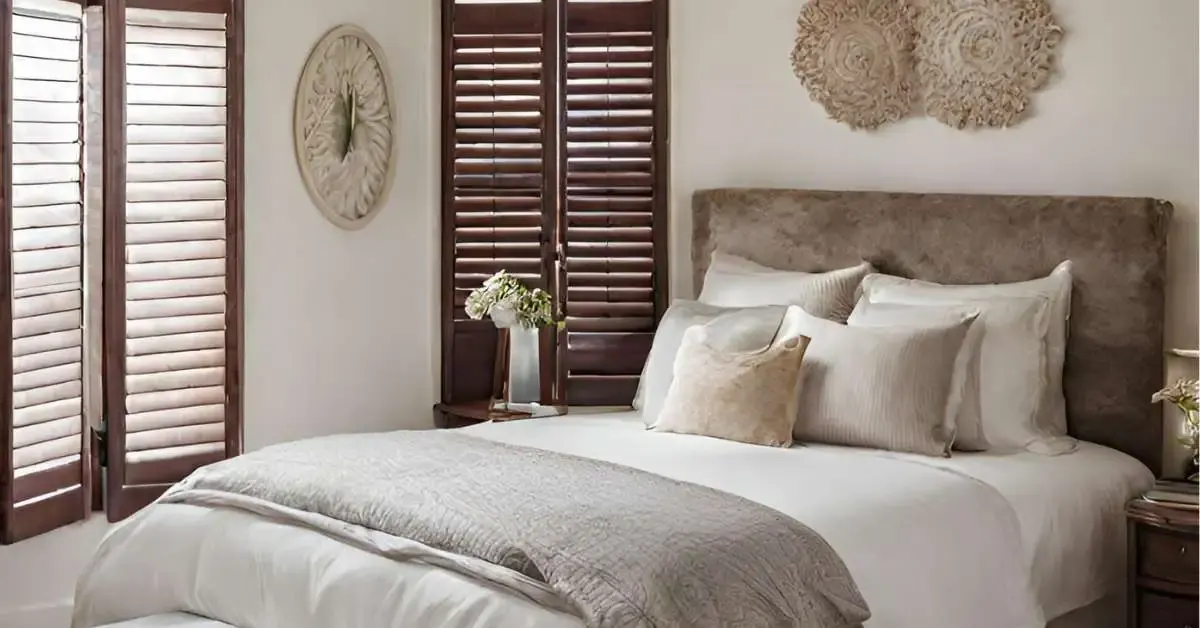
There's a reason specialty shape windows so often get left uncovered while the rest of the house gets finished: the standard catalog stops at rectangles and squares. Getting a shutter onto a curve or an angle is a real process, and it helps to know what that process involves before you start asking for quotes.
The Specialty Shapes We're Talking About
From the street, a specialty shape window is usually the first thing anyone notices about a house's front elevation, which is exactly why it's worth getting right rather than leaving it bare. Arch tops over a picture window, half-round transoms above the front door, the occasional octagon or trapezoid worked into a gable: these shapes exist because someone wanted the house to have a little more character than a row of plain rectangles.
The trouble is that character comes with a design gap. None of these shapes take a standard shutter off a size chart, and a bare arch or an uncovered gable window tends to undercut the exact curb appeal it was built to create. A Carmel house with nice shutters on every rectangular window and a bare arch in the middle looks unfinished, even if nobody can quite say why at first glance.
Closing that gap is less about function and more about making the whole front of the house read as one finished design, which is worth thinking about even before getting into fixed versus operable or pricing.
Cost, Lead Time, and What to Expect With a Specialty Order
Specialty shapes cost more than standard shutters, generally landing above the national 175 to 800 dollar per window range that covers typical rectangular shutters, with height and access adding their own cost on top of the shape itself for anything mounted high on a gable.
Lead time is the other factor worth planning around, especially for a new-build homeowner juggling a dozen other move-in tasks. Between the template, the review, and a shop that specializes in curved or angled frames actually building the piece, a specialty shape takes noticeably longer than a standard shutter order, so it's worth starting that process early rather than waiting until every other room is finished.
For a Carmel homeowner who's watched that gable window sit bare since closing day, the wait tends to be worth it. It's usually the last visibly unfinished piece on an otherwise complete front elevation, and once it's done, it stays done.
Specialty shapes are one of the few jobs in this trade where a template genuinely has to happen in person, so there's no shortcut around a free in-home measure. Someone traces the actual curve, you see the fixed versus operable tradeoff on your own window, and you get a real number instead of a guess.
Why a Tape Measure Isn't Enough for a Curve
Skipping the template step to save money isn't really an option here, and it's worth understanding why before assuming there's a shortcut. A tape measure gives straight-line distances. A curve isn't a straight line, so no combination of tape measurements accurately describes it.
The template, a tracing of the actual curve or angle taken directly off the window, is what lets the shop cut a frame that fits. Skipping it doesn't lower the price, since reputable shops won't build a shaped frame without one. What it does is raise the risk of a frame that doesn't seat properly, which costs far more to fix than the template would have cost to do right the first time.
Think of the template as the one part of this process where spending a little more care up front is what keeps the total cost from growing later.
Why Shutters Handle These Shapes Better Than Soft Treatments
Fabric and slat treatments both depend on a straight headrail or a rod to hang from, and a curved or angled opening doesn't give them one. That's the practical reason shutters dominate this category. A shutter is a rigid frame first, and the frame can be built to trace any shape the window actually is.
There are soft treatment workarounds for some shapes, mostly stationary fabric panels shirred onto a curved rod or mounted flat against the wall above the window, though they don't open or close. If the goal is actually controlling light through that section of glass, a shutter with a frame cut to the exact curve is usually the only option that does the job.
It also holds up better over time. A shaped fabric panel loses its form eventually, especially with humidity or direct sun on it, while a composite or wood shutter frame keeps its shape because it was built rigid from the start. That durability difference matters most on a window that sits in full sun most of the day.
Fixed Panels vs Operable Louvers on the Shaped Section
This is the decision that shapes the whole quote, and it's worth working through before getting attached to a number. A fixed panel is built to the exact curve of the opening and stays put. Whatever light and privacy setting it's built for is the setting it holds, permanently.
An operable panel tilts open and closed on the shaped section itself, which sounds like the obvious upgrade until you consider what it actually takes to build. Hardware that tilts smoothly along a straight stile is a solved problem. Hardware that tilts smoothly along a curve is a harder one, and the cost and lead time reflect that difference.
Most homeowners land on fixed for the curved or angled section specifically, and it's usually a practical call rather than a budget one. That section tends to sit above eye level, over a door or above the main rectangular window, so it's rarely the part anyone's reaching to adjust throughout the day. Saving the operable investment for the section people actually interact with is a reasonable way to spend the money.
Frequently Asked Questions
Will a specialty shape shutter match the ones on my other windows?
It can, as long as the frame style, the finish, and the louver size are specified to match. The shaped section usually becomes part of the same order as the rest of the room's shutters so the whole wall reads as one system rather than a mismatched addition.
What if my window is a trapezoid instead of a curve?
Angled shapes like trapezoids and triangles get the same templating treatment as curves. The angles just need to be measured precisely at each corner rather than traced along a curve, and the shop builds the frame to match those exact angles.
Is there a cheaper alternative to a custom shaped shutter?
A stationary fabric-covered panel cut to the shape is sometimes offered as a lower-cost option, though it won't open or close. For most specialty shapes, the honest answer is that there isn't a stock or off-the-shelf option, since the whole problem is that the shape isn't standard.
 What Actually Goes Wrong With Motorized Shades in Carmel
 Repair or Replace Your Carmel Blinds: How to Decide
 Do You Need Blackout, or Will Room Darkening Get the Job Done