Stain and Cord Mistakes That Damage Carmel Window Treatments

Every material on a window wants a slightly different cleaning approach, fabric handled nothing like wood or aluminum, and using the wrong one is how a lot of Carmel homeowners end up with a dull finish or a stretched-out fabric shade they did not need to have.
Routine Dusting for Every Kind of Covering
Dust is the thing that actually damages window treatments over time in a Carmel home, more than sun or humidity, simply because it never stops accumulating. A light pass every week or two keeps it from building into something that needs real effort to remove.
The right tool changes by material. A vacuum with a soft brush attachment on low suction works well on fabric shades and drapery hems. A dry microfiber cloth handles wood and aluminum slats, wiped in the direction of the slat while closed. Faux wood takes the same approach.
Cellular shades are the odd one out, since a cloth cannot reach down into the honeycomb folds. A vacuum brush attachment or a hair dryer set to cool, no heat, air only, does a better job working dust out of those pleats than wiping ever will.
Cleaning Wood and Aluminum Blinds
The mistake we see constantly in Carmel homes is someone wiping wood blinds with a wet cloth the same way they would aluminum, because nobody told them the two materials behave completely differently. The wood usually shows it within days, a slightly warped slat or a dull patch in the finish where moisture sat too long.
Another one: scrubbing aluminum slats hard enough to bend them. Aluminum is soft and bends easily under real pressure, so a light touch with a cloth is plenty, and pressing hard to remove a stubborn spot usually just puts a crease in the slat instead.
We have also seen faux wood blinds soaked in a tub like aluminum, which is not necessarily harmful but is not needed either, since a damp cloth in place handles faux wood just as well without the hassle of taking the whole blind down.
Cleaning Fabric Shades and Drapery
A professional in-home cleaning service exists for Carmel homeowners with fabric shades and drapery that need more than a spot treatment, and it is worth the cost compared to the alternative of a DIY wash going wrong on an expensive custom panel. Specialized on-site methods can clean without removing the panels from the window at all.
For routine upkeep between professional cleanings, a vacuum brush attachment and the occasional mild spot treatment covers almost everything, and that costs close to nothing since it just uses tools you likely already have.
Where money actually gets wasted is attempting to machine wash or fully soak a panel that was never built for it. A shrunk or distorted lining cannot really be fixed after the fact, so that is one corner not worth cutting to save a cleaning bill.
Handling Stains and Spots Without Making Them Worse
A Carmel kitchen shade sees grease and food splatter that a bedroom shade never will, so it is worth knowing the cornstarch-and-mild-soap approach for grease specifically, since regular soap alone often just smears grease around rather than lifting it.
In a bathroom, hard water spots on aluminum or faux wood blinds respond well to a little vinegar in water, wiped on and dried immediately, though this is not something to try on real wood, where any standing moisture is a risk regardless of what is in it.
A formal dining room rarely deals with real stains at all, so the bigger risk there is usually dust turning into a stubborn film over time rather than an actual spill needing treatment.
Caring for Cords and Motors
Ask what a slipping or creeping shade actually means in a Carmel home before assuming the whole unit needs replacing. Most of the time it is a cord lock or a lift mechanism that can be serviced on its own, at a fraction of the cost of a new shade.
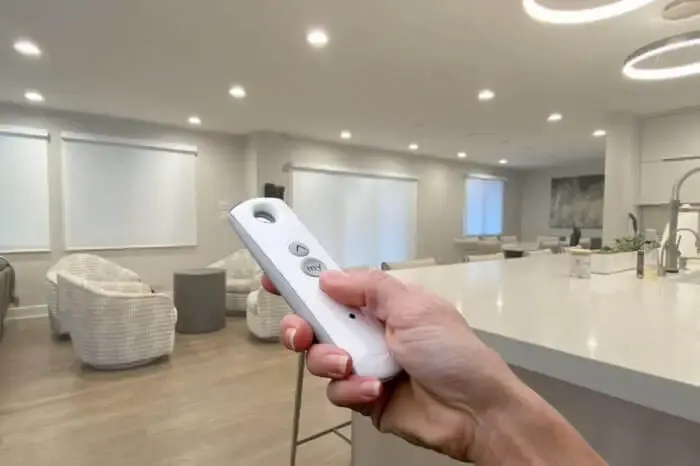
Ask whether a motorized shade needs any routine maintenance at all, since the honest answer for most systems is very little, no lubrication and no adjustment, just keeping the surrounding track free of dust buildup.
And if a corded shade is going into a home with young kids or pets, ask about cordless or motorized alternatives and about proper cord cleat installation either way. That is a safety question worth asking directly rather than assuming the standard setup is fine.
The safest cleaning advice is specific to your actual blinds and shades, not a general rule found online. A free in-home measure at your Carmel address is a practical time to ask about the exact materials you have and how to keep them looking right.
Frequently Asked Questions
Can I put fabric shades in the washing machine?
No, and doing so risks shrinking or distorting the pleats and hems permanently. Most fabric shades and drapery are spot-clean only. A vacuum brush attachment for routine dust and a mild soap solution for the occasional spot handles nearly everything that comes up day to day.
Is it safe to get real wood blinds wet?
Not really. Water can warp the slats and damage the finish in a way that does not fully reverse once it dries. Dust with a dry cloth or a vacuum brush, and if something needs more attention, a barely damp cloth followed immediately by a dry one is about as far as we would go.
Why do my blinds get dusty so fast?
Usually it is airflow. A ceiling fan or an HVAC vent blowing directly at a window pushes a steady stream of particles onto the nearest flat surface, and slats catch an unusual amount of it on their top edge. Closing the blind before dusting also helps, since open slats let dust fall straight through to the one below.
 What Actually Goes Wrong With Motorized Shades in Carmel
 Repair or Replace Your Carmel Blinds: How to Decide
 Do You Need Blackout, or Will Room Darkening Get the Job Done