What Custom Drapery Costs in Carmel and Why It Varies
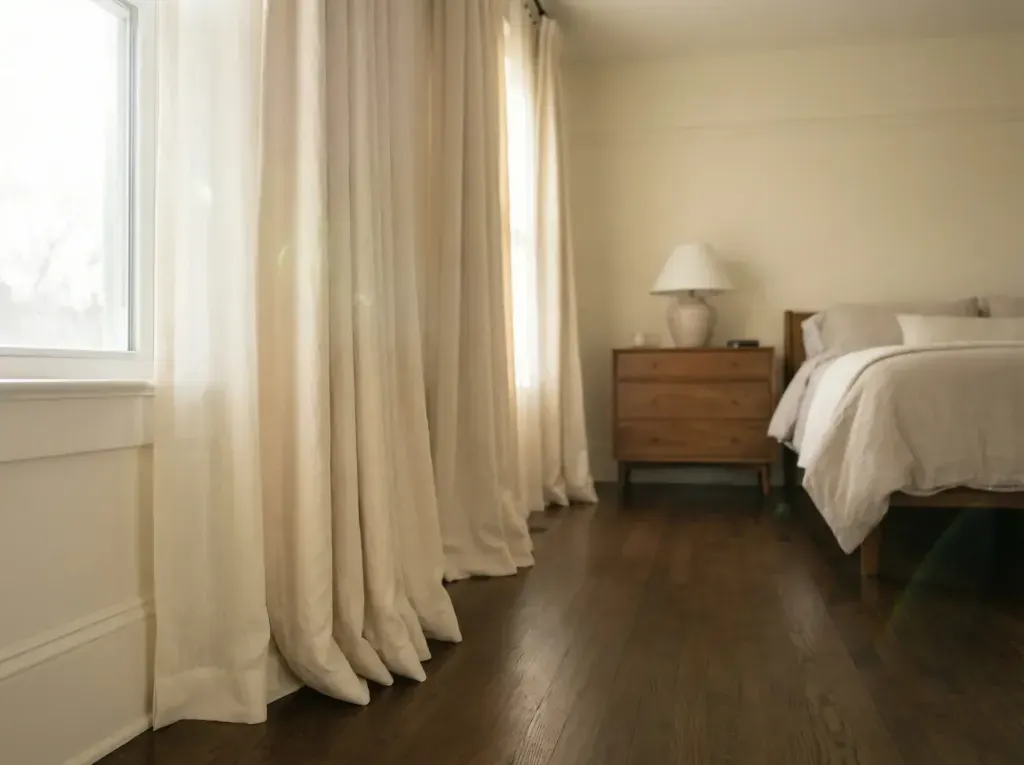
Drapery is the thing that makes a room feel finished, and it is also the easiest window treatment to get wrong, usually by hanging it too low for the wall. A shade can be adequate. Fabric is either right or it looks like an afterthought, and half the panels we replace around Claridge Farm were simply hung too low to begin with. This is a room by room walk through a Carmel house, with the pleat, the floor break, the lining and the layering call we would make in each space.
Pleat Styles and Fullness
Pleat style is the first decision on a custom drapery order, and it sets the tone for the panel. Pinch pleat: buckram header, hand tacked pleats, hung on rings or a traverse track, tailored and durable for decades. Two finger pleat: the same construction with less fabric per pleat, for a softer look. Euro pleat tacks at the top of the header only, letting fabric fall loosely below for a contemporary line. Goblet pleat holds a formal, stuffed, rounded shape best suited to a stationary panel, since drawing it daily flattens the shape. Ripplefold uses a dedicated track and evenly spaced carriers for a wave that stacks tight and motorizes easily. Grommet rides directly on a rod sized to the grommet opening, with a casual, deep wave.
Fullness ratio equals flat fabric width divided by the width the hung panel covers. Standard range for pleated drapery is 2 to 2.5 times. Sheers run 2.5 times or higher. Below 2 times, the pleats pinch and the panel reads thin regardless of fabric quality. Ripplefold is specified as a percentage, typically 80 to 100 percent, instead of a ratio.
Lining Choices and Fabric Behavior
Unlined drapery is soft and lets real light through, but the face fabric fades faster with nothing between it and the sun. Standard lining, a sateen backing, gives the panel body and reduces and slows fading on the face fabric, though it never stops it outright.
Blackout lining stops light through the cloth itself, but light still slips around the panel unless overlap and returns are generous, and needle holes at the tacks can show as small points of light. Interlining adds a soft flannel layer between face and lining. It is the most expensive option, adding weight for a deeper fold and softening sound a little in a hard room. Linen moves with humidity, so a panel that brushed the floor in a damp month can drag in a dry one, which is why it usually gets floated rather than kissed. Velvet needs real hardware behind it, and sheers need more fullness than anything else to avoid looking thin.
What Custom Drapery Costs
Fabric is the only part of a drapery quote most people can see, which is why it confuses buyers. Yardage usually moves the number the most: multiply the width covered by the fullness ratio, add returns and hems, divide by the usable fabric width for the number of cuts, then multiply by the finished length. A pattern repeat adds to that yardage fast, and a bold repeat on a tall Carmel window can waste real fabric.
Nationally, custom drapery measured and installed runs roughly $250 to $2,600 a window, usually landing toward the top of that range since yardage and construction labor both run higher than on most shades. A pinch pleated panel with interlining and mitered hems takes real time to sew by hand. Hardware tends to be quoted as a separate line, so confirm whether it is even included. Ask every company for the same list: fullness ratio, pleat style, lining type, whether hardware is included, and lead time.
Choosing Drapery Room by Room
A shade blocks light at the glass. Drapery softens the sound in a room and gives a window a reason to look like part of the wall instead of a hole punched through it.
- Living rooms get the most value from drapery, mounted high and wide, often stationary, with a shade underneath doing the light control.
- Dining rooms can go formal, since the room gets used at night more than during the day and pinch or goblet pleats with interlining fit that mood.
- Primary bedrooms need drapery working, not decorating: a blackout lined panel closed over a room darkening shade, with real overlap and full returns, is what actually blocks the light.
- Home offices benefit from stationary panels beside a solar shade, taking the edge off both glare and the echo that comes with hard floors and video calls.
- Kitchens and bathrooms mostly skip full length panels in favor of something shorter and wipeable.
Across Carmel and IN communities, the drapery that looks effortless almost always started the same way: the rod went up higher and wider than felt necessary, and the fabric got chosen only after.
A good drapery panel is mostly decided before the fabric ever gets cut: the pleat, the fullness, the lining, and the length that actually reaches your floor. Carmel Window Treatments treats the measure as the real work and the sewing as the part that follows it. Call (317) 863-9966, and we'll come measure your Carmel windows in person.
Hardware, Stack Back and Floor Break
Stack back is the amount of wall a fully open panel eats up, and it grows with fullness, fabric weight, lining and pleat style. It is also the reason half the drapery you see is sitting on top of the glass instead of off to the side. Run the rod wider than the window and higher than the trim, and the panels have somewhere to go besides the glass. Where the wall runs short on one side, a one way draw stacking entirely to the open side solves it.
A return tucks the panel back to the wall at the end of the rod, and without it, light runs down that outside edge. An overlap lets two panels cross in the middle so closing them leaves no gap. The bracket needs framing or a proper anchor, and a long rod needs a center support. Float, about half an inch off the floor, handles daily use and pets. Kiss just brushes the floor, stunning when level and merciless when not. Break adds an inch or two that folds softly at the bottom. Puddle piles three inches or more and belongs only on a panel that never moves. Measure the floor in a few spots, since plenty of Carmel floors are not as level as they look.
Frequently Asked Questions
Can drapery hang over blinds or shades I already have?
Yes, and that's how most drapery actually gets installed. The one thing to check is projection. Measure how far the existing headrail, cassette or fascia sticks out from the wall, then pick a bracket with enough reach that the panel never rubs it. A standard bracket often will not clear a deep fascia. Mount the rod higher and wider than the shade so the stack sits off the glass, and if the shade is motorized, keep the battery access reachable.
Does blackout lining make a room completely dark?
Not by itself. Blackout lining stops light through the cloth, but light still comes around the panel at the sides and over the top unless you have generous overlap in the middle and returns that carry the fabric back to the wall. Needle holes at the tacks can also show as small points of light on a bright window. The dependable setup is a blackout lined panel closed over a room darkening or blackout shade, which covers the edges the panel alone cannot.
What is interlining and is it worth paying for?
Interlining is a soft flannel layer sewn between the face fabric and the lining. It adds weight so the panel falls into deeper, more even folds, and it takes some of the edge off sound in a hard room. It's the most expensive lining choice, and it's also the one that makes an ordinary fabric look expensive. In a formal dining room or a primary bedroom, it earns its cost. In a casual den, standard lining is plenty.
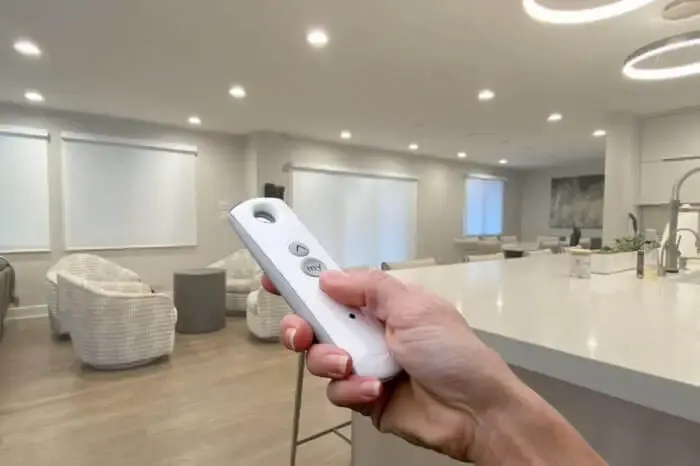 What Actually Goes Wrong With Motorized Shades in Carmel
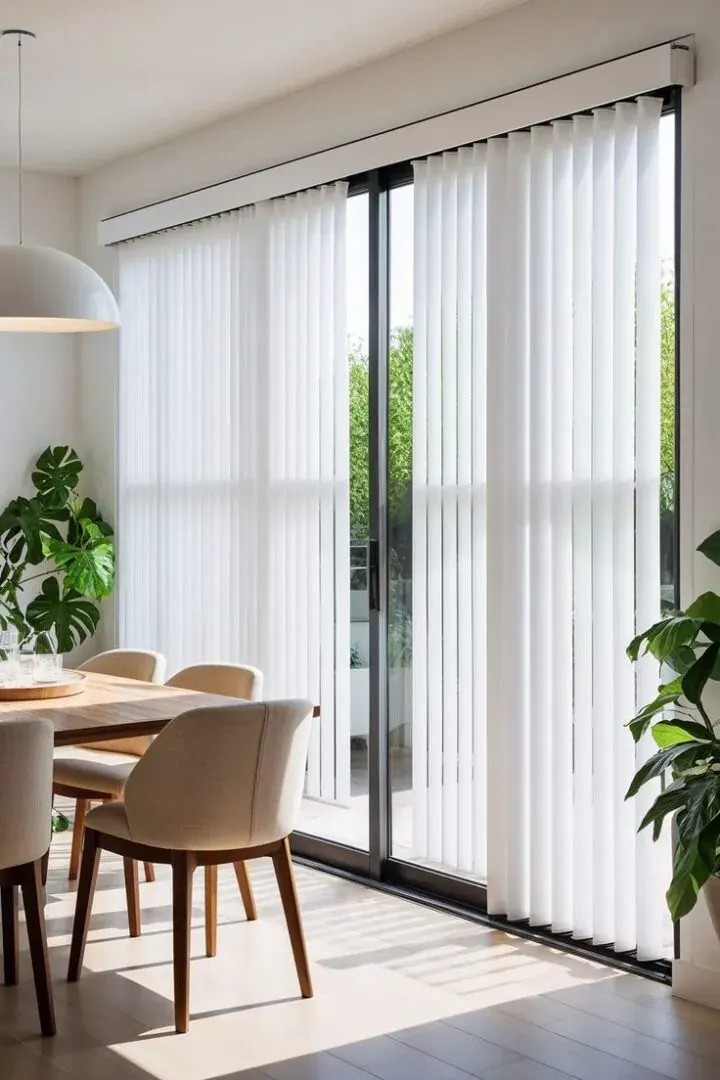 Repair or Replace Your Carmel Blinds: How to Decide
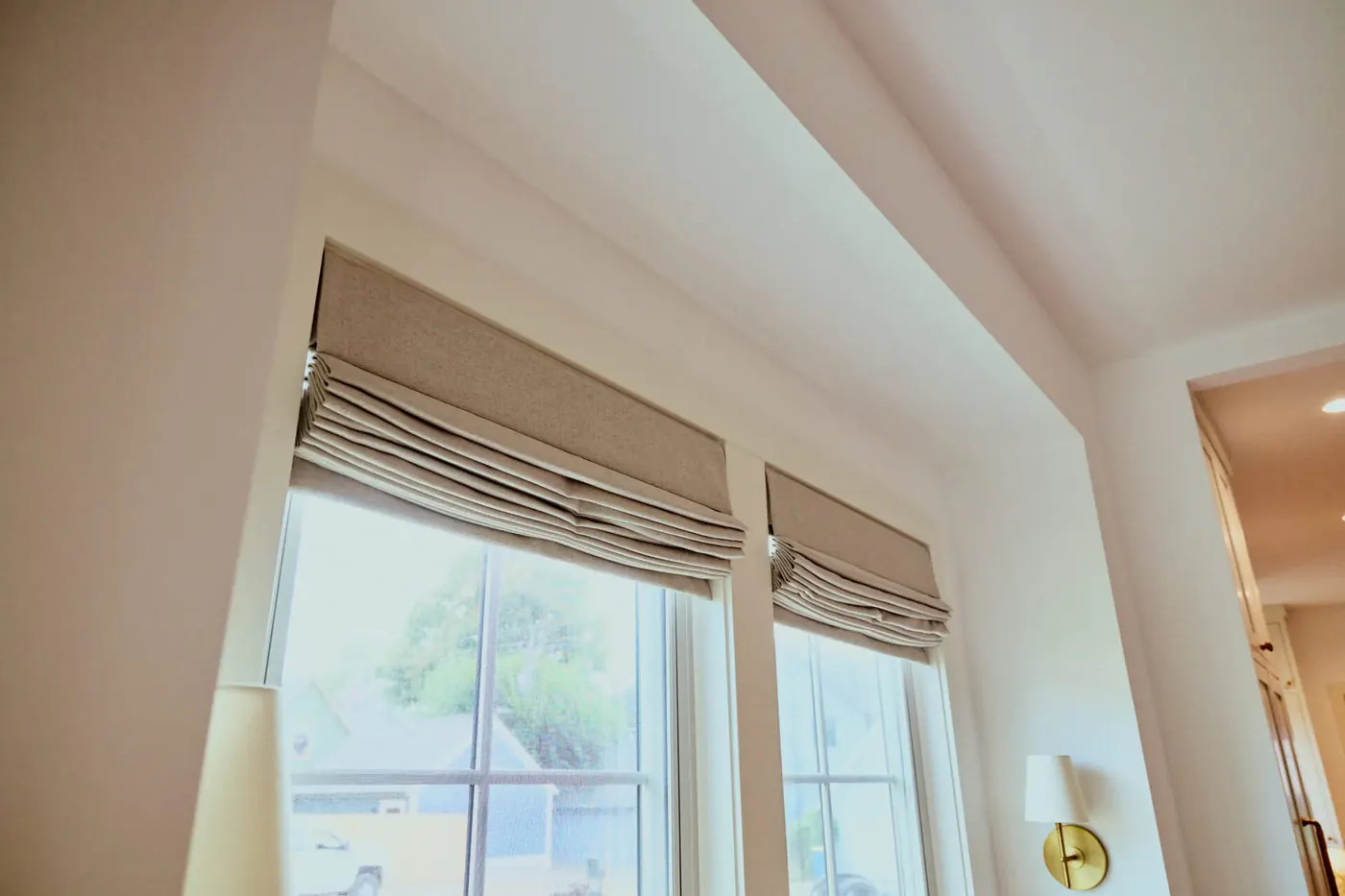 Do You Need Blackout, or Will Room Darkening Get the Job Done